Here are the most important factors to consider when you want to start an onlinebusiness: Niche and type of business — Define your niche andd ...
How to Start an LLC in Wisconsin: A Step-by-Step Guide for 2026
Written by: Carolyn Young
Carolyn Young is a business writer who focuses on entrepreneurial concepts and the business formation. She has over 25 years of experience in business roles, and has authored several entrepreneurship textbooks.
Published on June 29, 2026
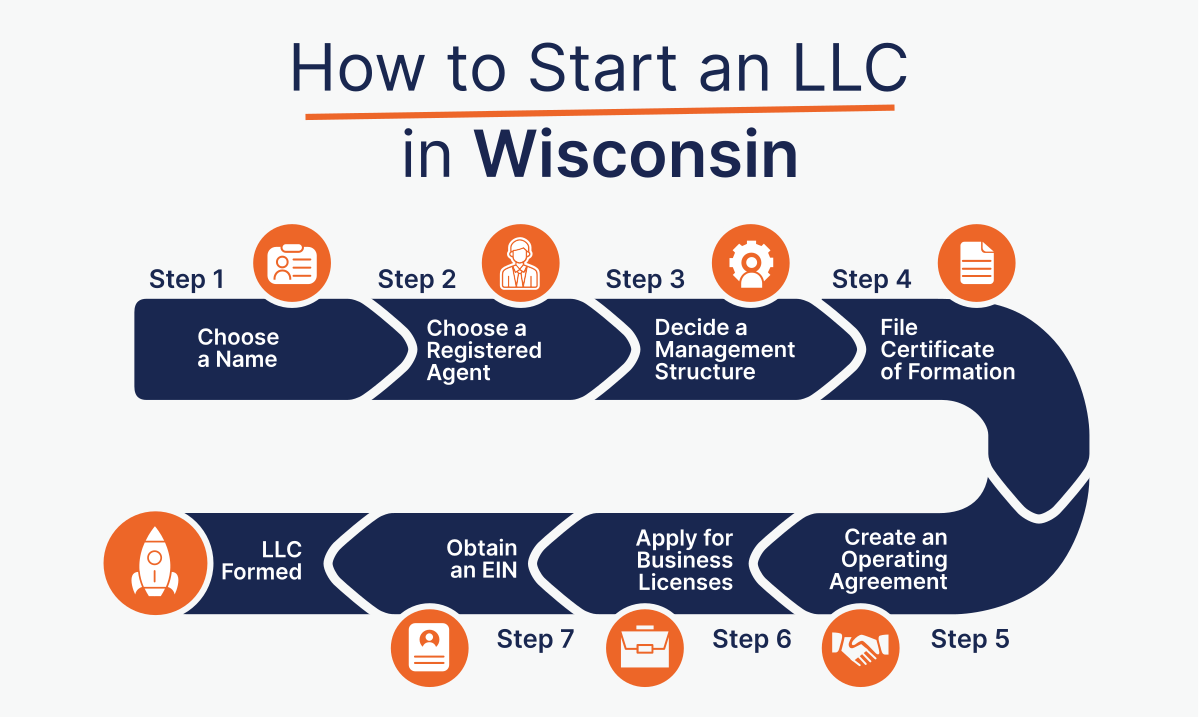
Starting a business in Wisconsin is more approachable than most first-time owners expect. The state keeps its formation process straightforward, the fees are reasonable, and most of the paperwork can be handled online in a single afternoon. The trick is doing the steps in the right order, so you do not pay twice or backtrack halfway through. This guide walks through forming a limited liability company (LLC) in Wisconsin from start to finish, from picking a structure to staying compliant after launch. By the end, you will know exactly what to file, where, and what it costs in 2026.
1. Choose your business structure
Before any paperwork, decide what kind of legal entity fits your situation. Most new Wisconsin business owners weigh two options: a sole proprietorship or a limited liability company.
A sole proprietorship is the default setting. If you start working under your own name and never file anything, you are already one. It costs nothing to set up, but it offers no separation between you and the business. If the company is sued or owes money, your personal assets are typically on the line.
An LLC changes that equation. It creates a separate legal entity, which means your personal savings, car, and home are generally protected from business debts and lawsuits. LLCs also stay simple at tax time, since profits usually pass through to your personal return by default. For most freelancers, side-hustle operators, and small businesses, the LLC is the practical middle ground between real protection and manageable paperwork. The rest of this guide assumes you are forming one.
2. Choose and check your business name
Your business name is the first thing the state will scrutinize, so it pays to get it right early. Wisconsin has two basic rules. First, the name has to include an LLC designator, such as “Limited Liability Company,” “LLC,” or “L.L.C.” Second, it has to be distinguishable from every other business entity already on file in the state. You also cannot imply that your company is a bank, an insurer, or a government agency unless it actually is one.
Before you register, confirm your chosen name is still available. Running a Wisconsin business search through the Department of Financial Institutions shows every active LLC and corporation on file, so you can make sure your name is free and look up the status of any existing entity.
However you phrase it, whether you type Wisconsin business entity search, Wisconsin LLC name lookup, or search Wisconsin business entities, you end up in the same place: the DFI’s records. They show each entity’s name availability, its DFI ID number, and its current entity status, whether active or inactive, which helps both for clearing your own name and for sizing up a competitor. Many people still call this a “Wisconsin Secretary of State business search” out of habit, but in Wisconsin the records are kept by the DFI, not the Secretary of State.
If the name is free but you are not quite ready to file your formation documents, you can reserve it. A name reservation costs $15 and holds the name for 120 days, which is handy when you still need time to line up funding or a registered agent.
3. Appoint a registered agent in Wisconsin
Every Wisconsin LLC must name a registered agent. This is the person or company that accepts legal documents, tax notices, and official state correspondence on the company’s behalf. The agent has to have a physical street address in Wisconsin (not a PO box) and be available during normal business hours.
You have three options. You can act as your own agent if you live in the state and do not mind your address appearing on the public record. You can name a trusted person, such as a co-owner or an attorney. Or you can hire a commercial registered agent service, which typically runs between $100 and $300 per year. Many owners go the paid route to keep their home address private and to make sure they never miss a legal notice, which can carry real consequences if it slips through the cracks. Whichever you choose, the agent’s name and address go on your formation documents.
4. File your formation documents with the Wisconsin DFI
This is the step that officially creates your LLC. You file a document called the Articles of Organization (Form 502) with the Wisconsin Department of Financial Institutions. You can do this online through the DFI’s QuickStart system at dfi.wi.gov or by mail.
The Articles ask for the basics: your LLC name, your principal office address, your registered agent’s name and Wisconsin address, whether the company is member-managed or manager-managed, and the name of the organizer filing the paperwork.
The cost in 2026 is $130 if you file online and $170 if you file by mail. Online is both cheaper and faster: most online filings are approved within one to two business days, while mailed forms can take five to seven business days plus postage. If you are in a hurry, expedited processing is available for an extra $25 and typically turns the filing around in a single business day.
Once the DFI approves your Articles, your LLC legally exists. You will receive confirmation, and your company will appear as active in the state’s records, the same database you searched back in step two.
5. Get an EIN and set up the essentials
With your LLC approved, a few setup tasks turn it into a working business.
- Get an EIN: An Employer Identification Number is the federal tax ID for your company. You need one to open a business bank account, hire employees, and file federal taxes. It is free, and you apply directly through the IRS. The online application takes about ten minutes and you usually receive the number immediately. There is no reason to pay a third party for this.
- Write an operating agreement: Wisconsin does not require you to file one with the state, but you should have one anyway. It is the internal rulebook for your LLC: who owns what, how profits are split, how decisions get made, and what happens if a member leaves. Banks often ask for it, and if you skip it, Wisconsin’s default rules apply, which may not match what you actually want.
- Open a business bank account: Keeping business and personal money separate is one of the simplest ways to protect the liability shield your LLC provides. Most banks will want your approved Articles, your EIN, and your operating agreement before they open the account.
6. Ongoing compliance
Forming the LLC is the start, not the finish line. To keep it in good standing, Wisconsin asks for a little upkeep each year.
The main obligation is the annual report, filed with the DFI. It costs $25 online (or $40 by mail) and simply confirms your current information: registered agent, addresses, and managers. Wisconsin uses an unusual quarterly deadline system. Your report is due by the last day of the calendar quarter in which your LLC was originally formed. An LLC formed in May, for example, falls in the second quarter and would file by June 30 in the years that follow.
Wisconsin does not charge a monetary late fee, but missing the deadline puts your entity out of good standing, and a prolonged failure to file can lead to administrative dissolution. If that happens, your business name is no longer protected and someone else can claim it, so it is worth setting a recurring reminder well ahead of the deadline. Fees and procedures can change from year to year, and every business has its own specifics, so when a tax or legal question goes beyond the basics, it is worth confirming the current rules or checking with a professional before you commit.
Subscribe to Our Newsletter
Join our exclusive community! Subscribe to our newsletter
and gain insider access to cutting-edge business insights and trends.
and gain insider access to cutting-edge business insights and trends.
Thank you for subscribing! We can't wait to share our latest news and updates with you. Get ready for exciting content in your inbox.
Featured Resources

How to Start an Online Business: A Step-by-Step Guide
Published on September 13, 2023
Read Now

Surf and Serve: Launching Your Internet Cafe Business
Published on September 8, 2023
Here are the most important factors to consider when you want to start an internetcafe: Location — Choose a location that is easilyaccessible ...
Read Now

How to Start a Truck Dispatching Business in 13 Steps
Published on July 22, 2023
Key aspects to consider when initiating your truck dispatchingbusiness: Define your services — Decide on the types of dispatching servicesyou ...
Read Now
Comments